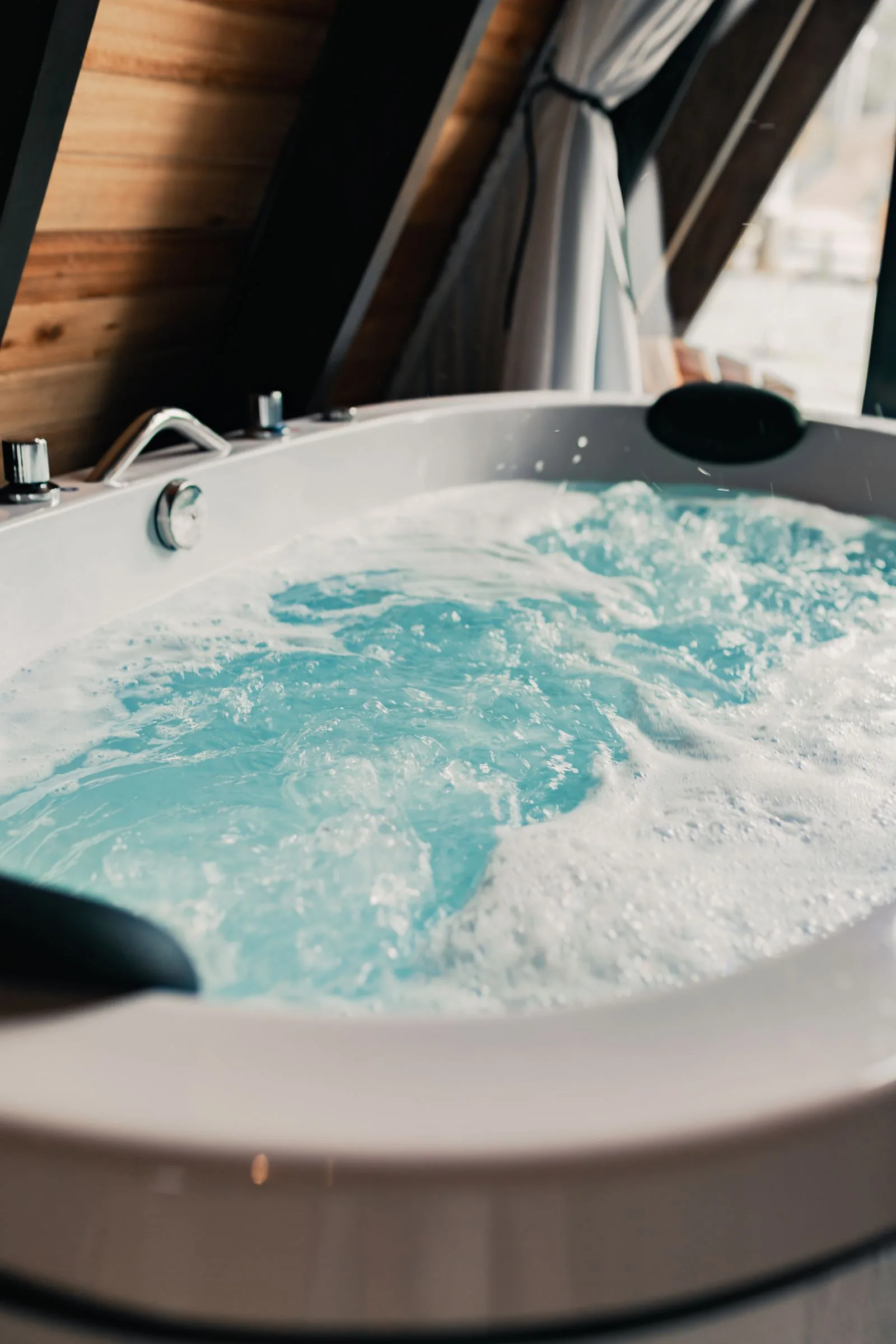
The best hot tub alkalinity increaser for most spa owners is SpaGuard Total Alkalinity Increaser: it is 100% sodium bicarbonate, it is the only granular pick here whose label gives a clear rate (1 tablespoon per 100 gallons raises total alkalinity about 25 ppm), and it carries a 4.8/5 average from 3,800+ Amazon ratings. If you hate measuring powder, the SpaGuard Rapid-Dissolve Tabs do the same job in drop-in form.
Almost every spa alkalinity increaser is the same chemical, sodium bicarbonate. What actually differs is the dosing guidance on the label, the container size and the form (granules or tabs). This page lines those up so you can work out how much to add for your tub’s gallons.
We may earn a commission when you buy through links on this page, at no extra cost to you. As an Amazon Associate we earn from qualifying purchases.
How we chose
We didn’t lab-test these products. We compared the manufacturer labels and dosage charts, the Amazon listings (rating and rating count as shown on November 14, 2026) and published dosing figures for sodium bicarbonate. Every product here is sold specifically for spas and hot tubs; we left out pool-size bags because a 5 lb or 16 lb bag is far more than most tubs use, and an opened bag of granules clumps once it picks up moisture.
Quick comparison
| Product | Form / size | Active ingredient | Label dose | Amazon rating (Nov 2026) |
|---|---|---|---|---|
| SpaGuard Total Alkalinity Increaser | Granular, 2 lb | Sodium bicarbonate 100% | 1 tbsp per 100 gal = about +25 ppm | 4.8/5, 3,848 ratings |
| Leisure Time ALK Alkalinity Increaser | Granular, 2 lb | Sodium hydrogen carbonate 100% | 1 oz (2 tbsp), circulate 30 min, retest, repeat | See listing |
| Clorox Pool&Spa Alkalinity Increaser (spa) | Granular, 2 lb | Not stated on the listing | Follow the bottle label | 4.8/5, 195 ratings |
| AquaDoc Total Alkalinity Increaser | Granular, 1 lb | Sodium bicarbonate | 1 oz (2 tbsp) per dose, circulate 30 min, retest | 4.7/5, 440 ratings |
| SpaGuard Rapid-Dissolve Alkalinity Increaser Tabs | Effervescent 1″ tabs, 1.25 lb | Sodium bicarbonate 60% | 2 tabs per 250 gal = about +30 ppm | 4.9/5, 12 ratings |
How much alkalinity increaser per 100 gallons? The numbers behind the labels
Labels word their doses differently, which is one reason owners overshoot. Here is what the sources say, normalized to 100 gallons:
- Chemistry baseline: about 1.4 lb of sodium bicarbonate raises total alkalinity (TA) by 10 ppm in 10,000 gallons. Scaled down, that is about 0.22 oz per 100 gallons per 10 ppm.
- SpaGuard label: 1 tablespoon per 100 gallons raises TA about 25 ppm.
- Natural Chemistry spa chart: 1 oz in 200 gallons raises TA 20 ppm, which works out to 0.5 oz per 100 gallons for 20 ppm.
- Leisure Time label: 1 oz equals 2 tablespoons, so 1 tablespoon is about 0.5 oz.
Put together, they agree more than they first appear to: half an ounce (one level tablespoon) of 100% sodium bicarbonate in 100 gallons lands in the +20 to +25 ppm range. In a 400-gallon tub the same tablespoon raises TA only about 5-6 ppm, because the powder is spread through four times the water.
| Tub size | To raise TA ~10 ppm (100% sodium bicarbonate) | To raise TA ~20 ppm |
|---|---|---|
| 250 gal | about 0.55 oz (just over 1 tbsp) | about 1.1 oz |
| 400 gal | about 0.9 oz (just under 2 tbsp) | about 1.8 oz |
| 500 gal | about 1.1 oz | about 2.2 oz |
These starting doses are calculated from the 1.4 lb per 10,000 gallon figure. Your test result after 30 minutes of circulation is what counts, so add about half the calculated amount first, retest, then top up. That is the same add-circulate-retest loop Leisure Time and AquaDoc print on their bottles.
The 5 picks
1. SpaGuard Total Alkalinity Increaser (2 lb): best overall
Who it’s for: anyone who wants a label dose they can actually calculate with. Who should skip it: owners who already keep plain baking soda for the tub; it is the same chemical.
SpaGuard (a BioGuard brand) lists the active ingredient as 100% sodium bicarbonate and gives a rate of about 25 ppm per tablespoon per 100 gallons. The label targets 80-120 ppm and says to broadcast it with the pump on high, then run circulation for 30 minutes before retesting. The manufacturer lists it as compatible with chlorine, bromine, ozone and biguanide.
- Pro: clearest dosing rate of the five, so you can calculate instead of guessing
- Pro: 100% sodium bicarbonate, no fillers
- Pro: 4.8/5 from 3,848 Amazon ratings, the largest rating pool here
- Con: costs more per ounce than generic baking soda for the same chemical
- Con: the Amazon spec table lists the item form as “Tablet” although the product is granular, so go by the title, not the spec box
2. Leisure Time ALK Alkalinity Increaser (2 lb): best for small, cautious corrections
Who it’s for: Leisure Time users who prefer to creep up on the target in fixed 1 oz steps. Who should skip it: anyone who wants a ppm-per-dose figure on the bottle.
Leisure Time’s label is a loop rather than a chart: add 1 oz (2 tablespoons), circulate 30 minutes, retest, repeat until TA reads 80-120 ppm. Retailer copies of the label list the ingredient as sodium hydrogen carbonate 100% (another name for sodium bicarbonate) and compatibility with chlorine, bromine, ozone and biguanide. Leisure Time also suggests pre-dissolving granules in a small plastic pail of water before adding them.
- Pro: fixed-step routine that is hard to overshoot by much in a 300+ gallon tub
- Pro: part of Leisure Time’s spa balancer line if you already use their sanitizer
- Pro: the pre-dissolving tip helps avoid undissolved granules sitting in the footwell
- Con: no ppm-per-dose figure, so expect several test-and-add rounds
- Con: Amazon reviewers point out that Leisure Time’s Spa Up pH increaser is the same sodium bicarbonate, sold under a different name
3. Clorox Pool&Spa Alkalinity Increaser for spas (2 lb): easiest to find in stores
Who it’s for: chlorine-tub owners who already buy Clorox Spa products. Who should skip it: anyone who wants the ingredient and dose rate confirmed before buying.
This is the spa-labeled 2 lb version (model 11032CSP), not Clorox’s 5 lb pool bag. Clorox says to broadcast the granules while the spa is not in use and the pump is running, and pitches it for stable pH and chlorine effectiveness. On Amazon it holds 4.8/5 from 195 ratings.
- Pro: spa-sized container, unlike most of Clorox’s alkalinity range
- Pro: 4.8/5 average on Amazon
- Pro: the 2 lb spa version is also stocked by Walmart, handy if you run out mid-season
- Con: the Amazon listing does not state the active ingredient or a ppm-per-dose figure; check the bottle label
- Con: far fewer Amazon ratings than SpaGuard
4. AquaDoc Total Alkalinity Increaser (1 lb): best small container
Who it’s for: owners of small or inflatable tubs who mainly need a correction after each refill. Who should skip it: large tubs or swim spas, where 1 lb goes quickly.
AquaDoc sells a 1 lb bottle of sodium bicarbonate made in the USA. The listing’s directions are the same loop as Leisure Time (1 oz or 2 tablespoons per dose, circulate 30 minutes, retest) and say it is safe for acrylic, fiberglass and vinyl surfaces when used as directed. It rates 4.7/5 from 440 Amazon ratings.
- Pro: a smaller container gets used up before it sits half-open for seasons
- Pro: listing confirms vinyl compatibility, relevant for inflatable tubs
- Pro: 4.7/5 from 440 ratings
- Con: highest cost per ounce of the Amazon listings we checked
- Con: no ppm-per-dose figure on the listing
5. SpaGuard Rapid-Dissolve Alkalinity Increaser Tabs (1.25 lb): best no-measure option
Who it’s for: owners who want to drop in a counted dose without a measuring spoon. Who should skip it: anyone who wants the most sodium bicarbonate per dollar.
These are 1-inch effervescent tablets that go into the filter compartment with the jet pump running. The dosage chart is simple: 2 tabs per 250 gallons raises TA about 30 ppm, 4 tabs per 500 gallons does the same, and the chart continues up to 1,500-gallon swim spas. Retailer copies of the label list sodium bicarbonate at 60% with 40% other ingredients. The manufacturer notes the water may cloud briefly after a large dose.
- Pro: no measuring, no spilled powder
- Pro: dose chart covers 250 to 1,500 gallons, useful for swim spas
- Pro: 4.9/5 on Amazon, though from only 12 ratings
- Con: only 60% sodium bicarbonate, so part of what you pay for is binder and effervescent agents
- Con: whole-tab doses make fine corrections (+5 to +10 ppm) harder in a small tub
Which one should you buy?
- You want to calculate the dose once and be done: SpaGuard Total Alkalinity Increaser, the only granular label here with a ppm rate.
- Your tub is under 300 gallons or inflatable: AquaDoc’s 1 lb bottle, or the SpaGuard tabs if you would rather count tabs than measure powder.
- You run a swim spa or a 600+ gallon tub: SpaGuard tabs (the chart goes to 1,500 gallons) or SpaGuard granules for bigger corrections.
- You already use Leisure Time or Clorox Spa chemicals: their increaser works the same way; follow the add-circulate-retest loop.
Alkalinity increaser vs pH increaser vs baking soda
An alkalinity increaser is sodium bicarbonate. It raises TA strongly and pH only a little. A pH increaser is often sodium carbonate (soda ash), which pushes pH up much harder, although some brands, including SpaGuard, sell sodium bicarbonate under a pH-increaser label too. Read the ingredient line, not the product name.
Plain household baking soda is also sodium bicarbonate, and pool dosing references use the same 1.4 lb per 10,000 gallons figure for it. The branded spa products add a measuring cap, a dosing label and a sealed container. If you go the baking-soda route, use plain baking soda only, never washing soda, which is sodium carbonate and can spike pH.
The order matters: SpaGuard’s guidance is to balance total alkalinity first, then pH, because TA is the buffer that keeps pH from bouncing. Test both with test strips matched to your sanitizer before you add anything.
FAQ
Does alkalinity increaser raise pH?
Yes, a little. Sodium bicarbonate lifts TA much more than pH, which is why manufacturers recommend correcting TA first and then fine-tuning pH. If pH is still low once TA is 80-120 ppm, use a pH increaser.
What should total alkalinity be in a hot tub?
SpaGuard, Leisure Time and AquaDoc labels and the Clorox product page all work toward 80-120 ppm. Some spa manufacturers specify a different range, so check your owner’s manual.
How long after adding alkalinity increaser can I get in?
The labels here say to run circulation for 30 minutes and retest. Wait until the retest shows TA and pH in range before soaking.
Why is my alkalinity low after every refill?
Fill water often starts below target: one spa-care guide puts most North American tap water at 40-80 ppm straight from the hose. pH decreaser (sodium bisulfate) also lowers TA along with pH, so retest TA after every pH-down dose and after any shock treatment.
Can too much alkalinity increaser cause cloudy water?
It can. Overdosing pushes TA high, and high TA is linked to cloudy water and scale. The fix is a pH decreaser added gradually with retests. If the water also foams, a defoamer treats the symptom, not the balance.
Sources
Checked November 14, 2026.
- SpaGuard Total Alkalinity Increaser product page (ingredient, 25 ppm per tbsp per 100 gal, 80-120 ppm target, compatibility, TA before pH): leisuretimeinc.com
- SpaGuard pH Increaser product page (sodium bicarbonate under a pH-increaser label): leisuretimeinc.com
- SpaGuard Rapid-Dissolve Alkalinity Increaser Tabs product page (2 tabs per 250 gal, cloudiness note): leisuretimeinc.com
- SpaGuard tabs dosage chart 250-1,500 gal and 60% sodium bicarbonate ingredient line: poolgeek.com
- Leisure Time Alkalinity Increaser label (1 oz = 2 tbsp, 30-minute loop, 100% sodium hydrogen carbonate, pre-dissolve tip): spaheadquarters.com, poolaqua.com
- Clorox Spa Alkalinity Increaser product page (application instructions): cloroxpool.com; Walmart listing for the 2 lb spa size: walmart.com
- Natural Chemistry Spa Alkalinity Increaser dosage chart (1 oz per 200 gal = 20 ppm): label PDF
- Sodium bicarbonate dosing, 1.4 lb per 10,000 gal per 10 ppm: poolfounder.com, measureshed.com
- Fill water TA 40-80 ppm: mavaquadoc.com; washing soda pH spike and sodium bisulfate lowering TA: hottubsprice.com; overdosing and cloudy water/scaling: ezhottubs.com
- Amazon listings (ratings, counts, prices for cost-per-ounce, directions, reviewer notes): ASIN B006MHSKZ2 (SpaGuard granules), ASIN B000NCPAOQ (Leisure Time ALK), ASIN B000V89QRY (Leisure Time Spa Up, review summary), ASIN B0DDFTMJ9S (Clorox spa 2 lb), ASIN B0H1PNSL1W (AquaDoc 1 lb), ASIN B0CV4LCMW7 (SpaGuard tabs)
- Owner notes / photos: none